top of page

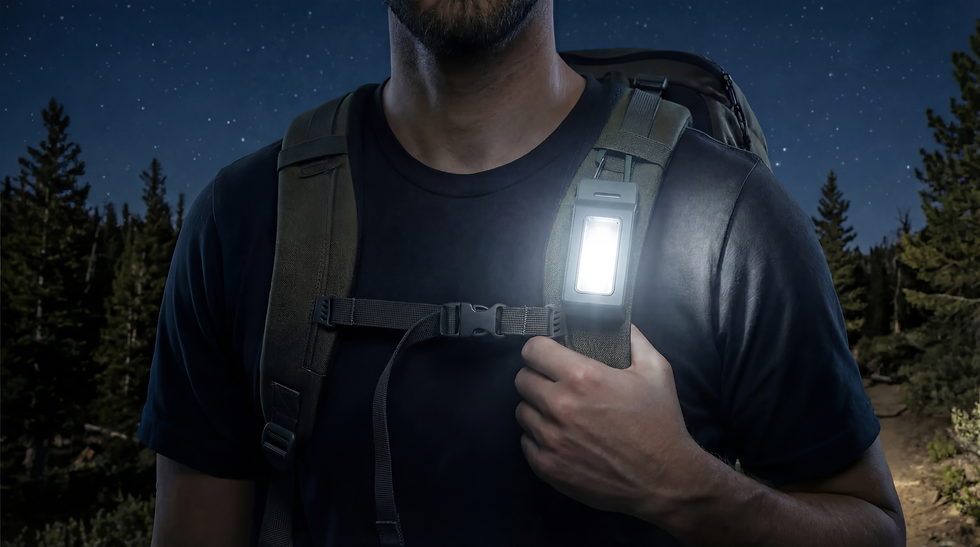

Black Diamond Blaze
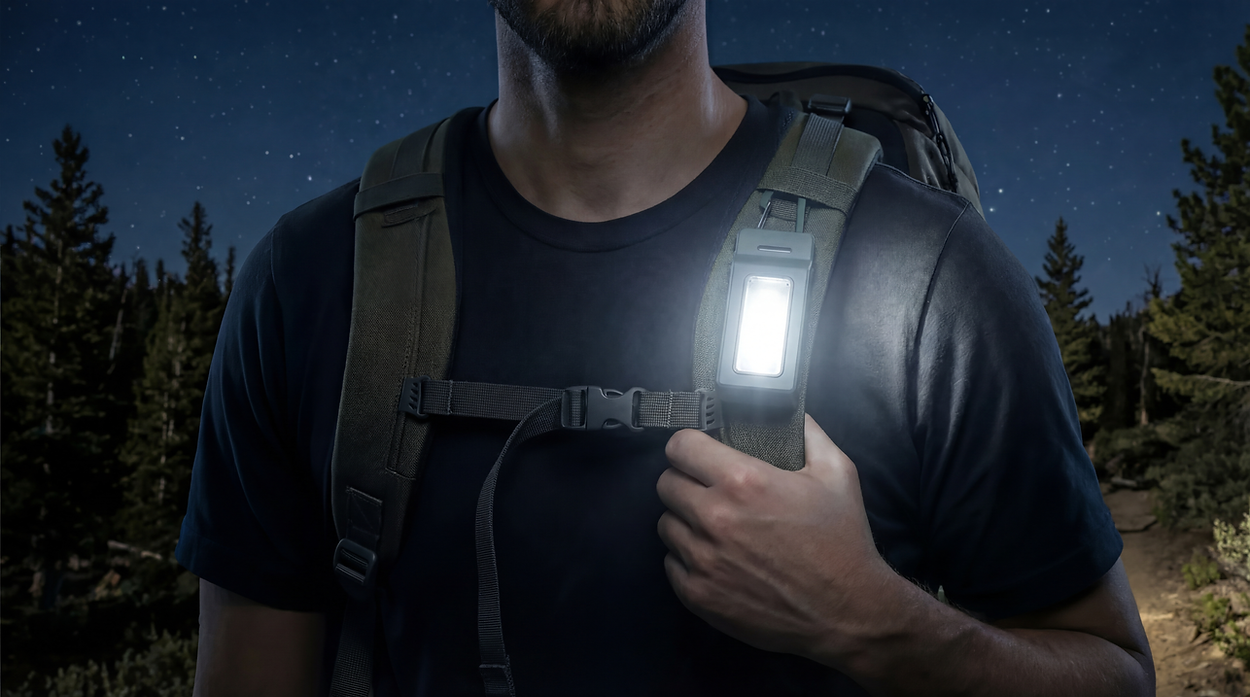
An intuitive night hiking light that adapts to movement and provides hands free illumination where it’s needed.
Brand Research - Product Ideation - Form Development - Design for Production
Spring 2026
Duration - 6 Weeks
Images on this page are for demonstration purposes only in a non-profit educational context. They do not represent or endorse actual products or services of Black Diamond.

Objective
Design a production-ready lighting solution while also seamlessly integrating it into the Black Diamond product line.

The Design Language
Black Diamond’s forms are rugged but clean, with strong geometric shapes that prioritize function over softness. Surfaces are faceted and angular rather than round, creating a visual language that communicates durability, precision, and reliability in demanding environments.
Interaction zones are clearly defined through breaks in geometry, texture changes, or exposed structural elements, making functionality immediately legible, even with gloves or in low-light conditions.


The Thrill of Night Hiking
Night hiking is a growing trend within outdoor recreation, rapidly gaining popularity as more hikers seek cooler temperatures, fewer crowds, and a new way to experience familiar trails.
Time: ~ 6 PM to 12 AM
Areas: Dirt/Rock Paths
Lighting: Dim or Dark

Night Hiking Heightens Risk
Night hiking can be rewarding, offering unique experiences, but it’s riskier: about 75 % of U.S. pedestrian fatalities occur after dark, showing low‑light conditions greatly increase danger.
Current Lighting Falls Short...

Single-Point Lighting Dependency
Head or hand-mounted lights lose visibility when the user turns or shifts grip.

Uncomfortable Lighting Gear
Headlamps and handheld lights can feel bulky, bounce during movement, or limit freedom.

Limited Situational Awareness
Narrow beams reduce visibility of surroundings, trail markers, and nearby activity.
What If...
A light could stay fixed on the body while shaping illumination in every direction?
Hands-On Prototype Development

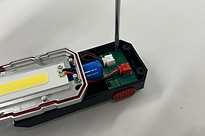


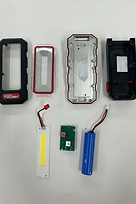
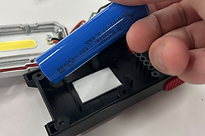

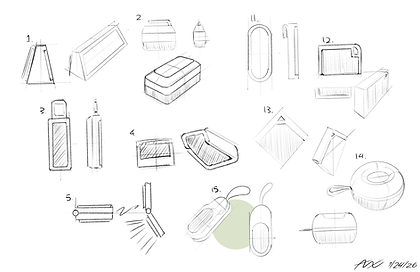


In this stage, I purchased and disassembled an existing light to better understand its internal components and constraints. I then sketched concepts around these parts, ensuring each component could be efficiently integrated into the overall design.
Throughout the process, I referenced previous Black Diamond products to align the design with their established language and visual identity.
Afterwards, I began physically prototyping, determining how components would be assembled and secured, and making adjustments as needed.


How could we...
Rethink or relocate fixed illumination to expand spatial awareness?
Final Product — Design Solution


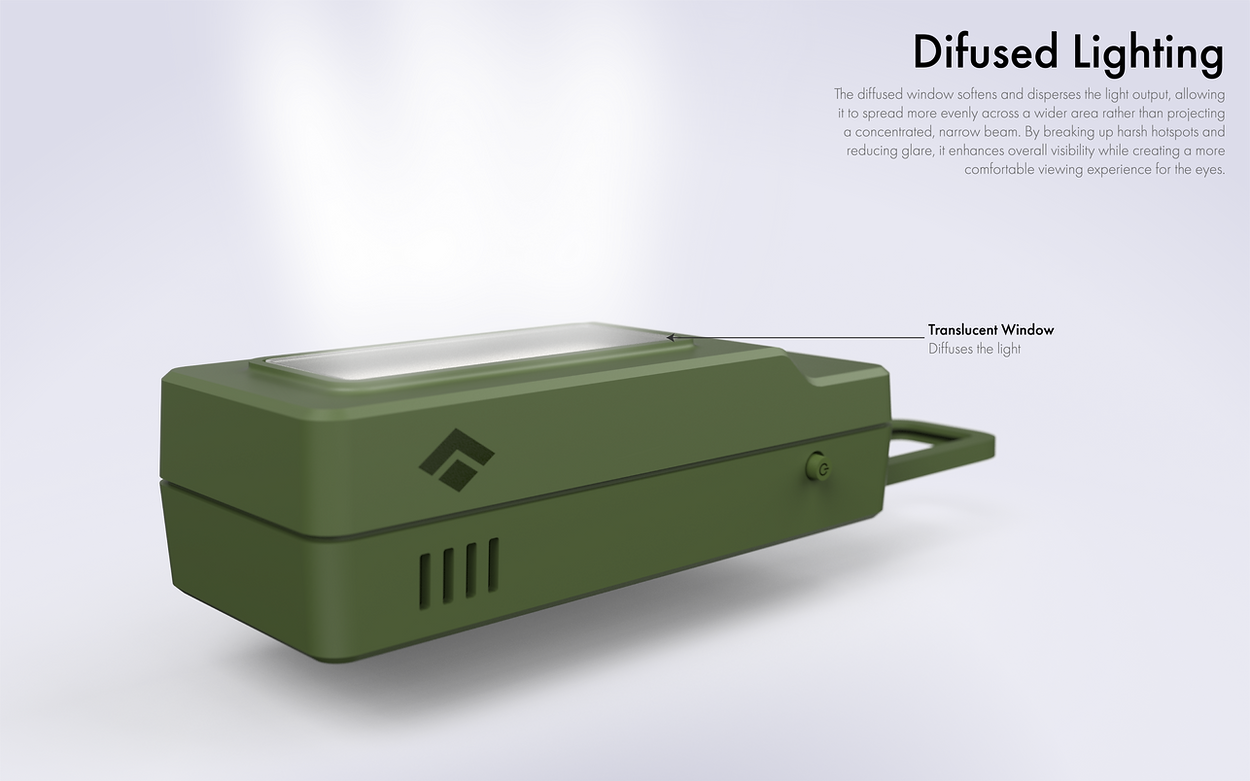

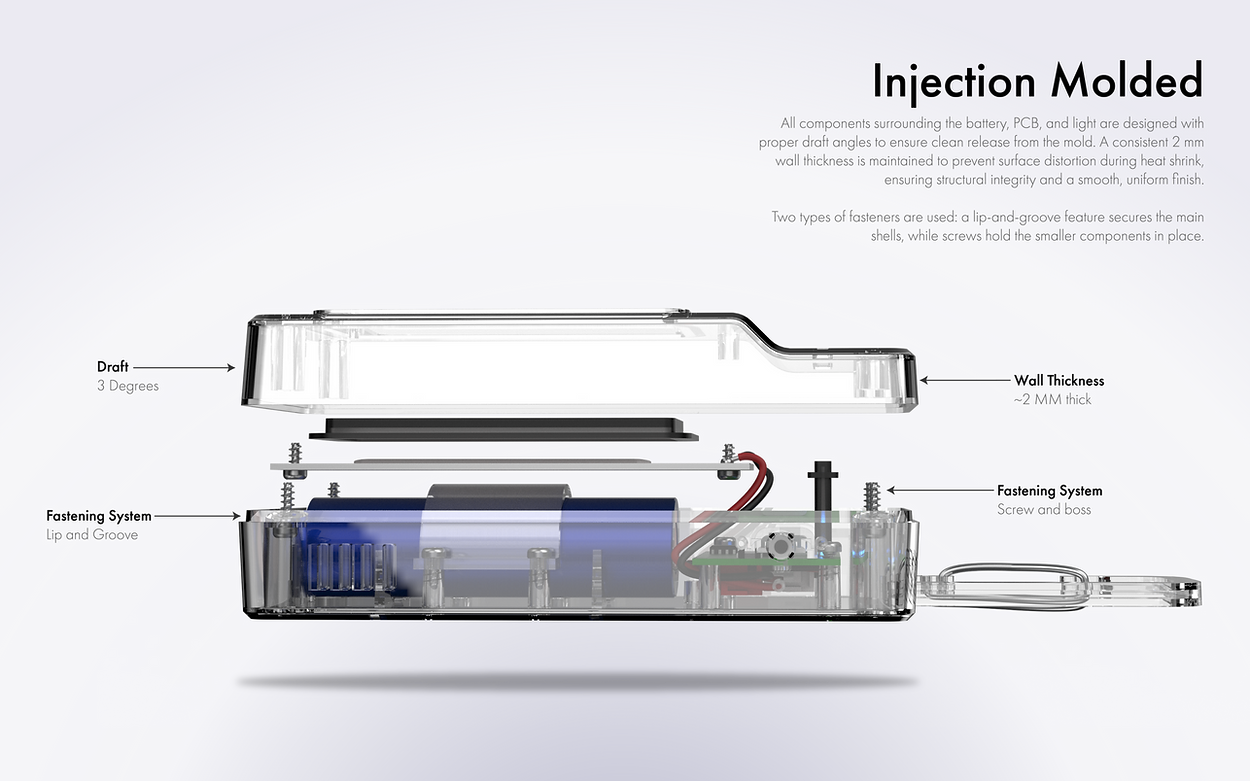

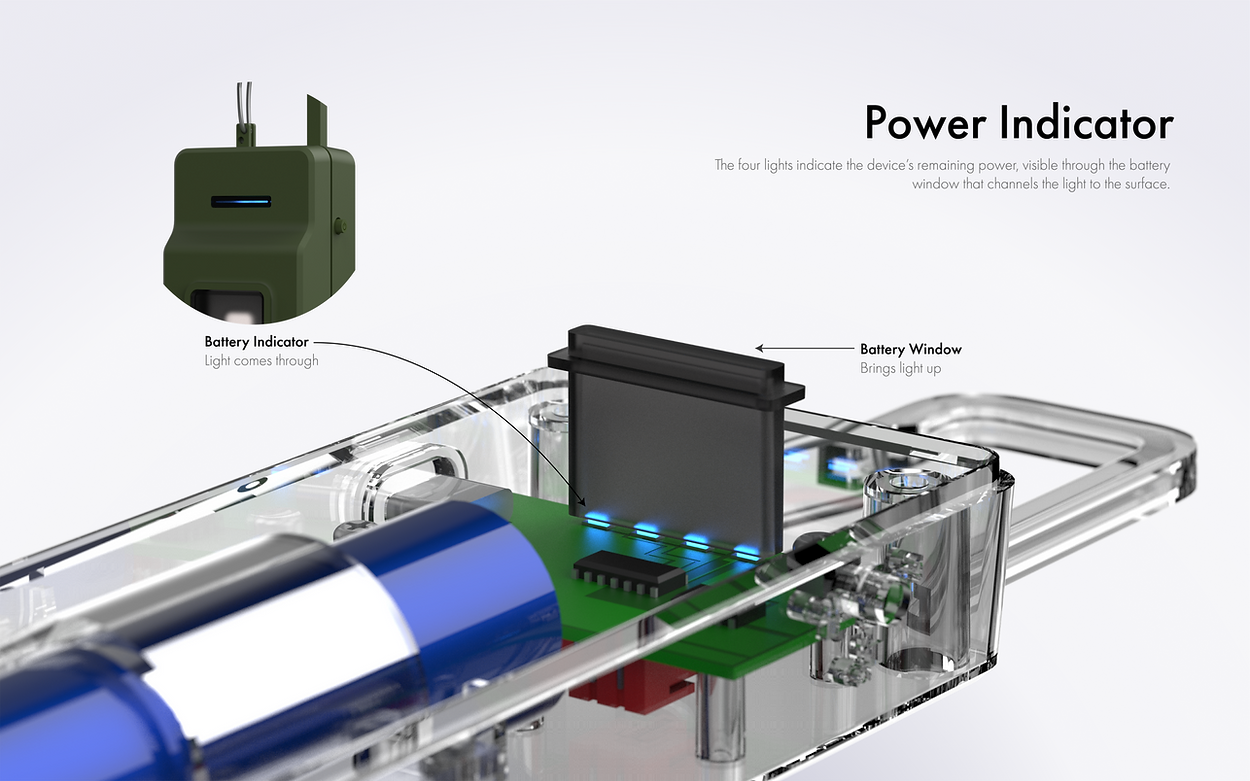

Prototyping Process.


bottom of page